 English
How does a multilayer vulcanizing press improve production efficiency?
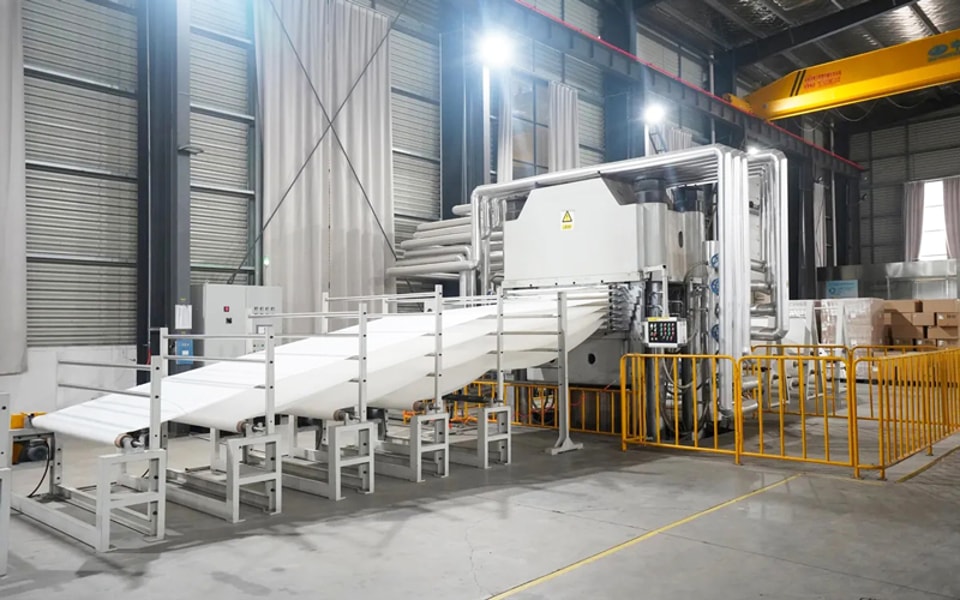
By employing a structural design featuring "multi-layer simultaneous pressurization, independent temperature control for each layer, and continuous cyclic production," multi-layer vulcanizing presses fundamentally transform the traditional production model—characterized by low efficiency, large footprints, and high labor dependency—thereby offering significant efficiency advantages in industries such as rubber products, composite materials, seals, and rubber sheeting.
First, the multi-layer structure is the core driver of efficiency. While traditional single-layer vulcanizing machines can only process one mold at a time, multi-layer presses typically utilize a stacked design of multiple heating platens. This allows for the simultaneous placement of multiple mold sets, enabling the vulcanization and molding of multiple product batches within a single pressurization cycle. Consequently, the equipment's "output per unit of time" increases exponentially, achieving expanded production capacity without increasing the floor space footprint. This parallel processing mode is particularly effective for mass-producing standardized products, significantly reducing the number of machines required.
Second, precise control over temperature and pressure further boosts production efficiency. Multi-layer vulcanizing presses are usually equipped with zoned temperature control and high-precision hydraulic systems, ensuring stable and uniform temperature and pressure distribution across every heating platen. Issues common to traditional equipment—such as temperature differentials between top and bottom platens or uneven pressure—often lead to extended vulcanization times or the need for product rework. In contrast, multi-layer equipment optimizes heat transfer structures and employs automatic compensation mechanisms to stabilize the vulcanization reaction, shorten process cycles, and lower scrap rates, thereby indirectly enhancing overall production efficiency.
Third, the increased level of automation is a critical factor. Modern multi-layer vulcanizing presses typically feature automatic mold opening and closing, automated material loading and unloading systems, and intelligent controls that enable one-touch startup and continuous cyclic operation. Operators need only handle raw material preparation and finished product collection; the machine automatically executes the entire process—including pressurization, pressure holding, degassing, vulcanization, and mold opening. Compared to traditional methods requiring frequent manual intervention, this approach reduces labor costs, eliminates human error, and enhances continuous production capabilities, allowing for stable, long-term equipment operation.
Fourth, the multi-layer design minimizes wasted auxiliary time. With traditional single-layer equipment, every completed vulcanization cycle necessitates mold changes, temperature recovery, and pressure adjustments—auxiliary tasks that account for a significant portion of the total production time. Multi-layer vulcanizing presses employ a cyclic production method that allows for the alternating loading and unloading of molds across different layers, thereby enabling "simultaneous production and preparation." This paced production approach effectively minimizes equipment idle time and enhances equipment utilization rates.
Furthermore, energy-saving features indirectly boost overall efficiency. These presses utilize centralized heating and highly efficient thermal insulation structures to significantly reduce heat loss. Because multiple layers operate concurrently, energy consumption per unit of product drops markedly; over extended periods of operation, this not only lowers production costs but also reduces downtime caused by energy supply fluctuations, thereby improving overall production continuity.
Finally, the advantages of multi-layer vulcanizing presses in production management are equally significant. Their standardized operating modes facilitate the unified control of process parameters and reduce operational complexity, making the production process easier to monitor and optimize. Enterprises can utilize digital control systems to monitor key parameters—such as temperature, pressure, and time—in real-time, ensuring process stability and minimizing efficiency losses caused by fluctuations.
In summary, through mechanisms such as multi-layer parallel production, precise temperature and pressure control, automated operation, reduced auxiliary time, and energy optimization, multi-layer vulcanizing presses comprehensively enhance production efficiency—from equipment structure to process workflow—making them vital equipment in modern, high-efficiency rubber and composite material manufacturing.


