 English
Which materials are suitable for hot pressing lamination?
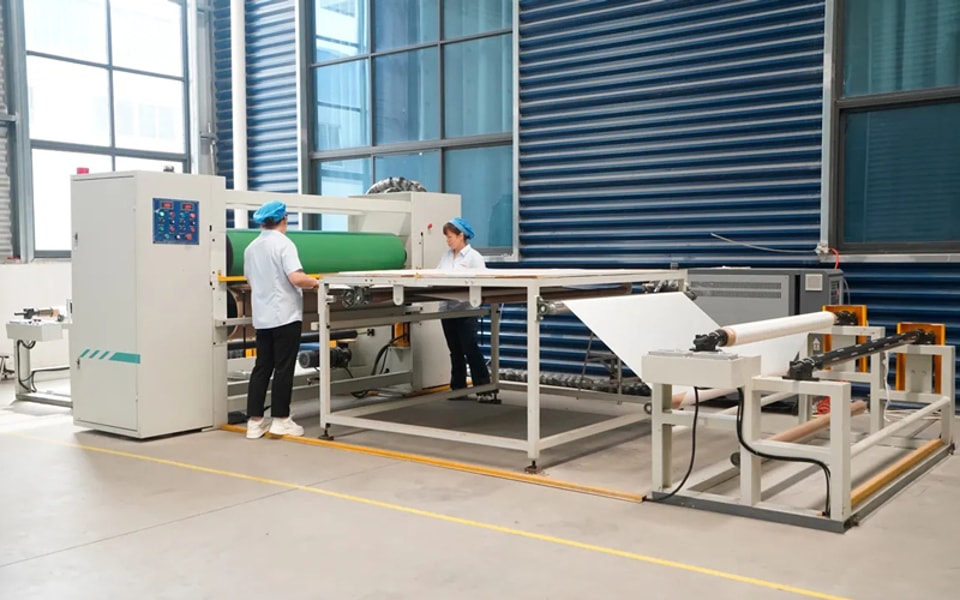
Hot-press lamination is a manufacturing process that utilizes temperature, pressure, and a specific dwell time to securely bond two or more materials into a composite structure. Characterized by high bonding strength, excellent surface flatness, and high production efficiency, this process is suitable for laminating a wide range of materials. Depending on material properties and application fields, hot-press laminating machines can process various categories of materials, including textiles, polymers, foams, leather, metals, and functional composites.
First, textiles are among the most widely used materials in hot-press lamination. Fabrics made from various natural and synthetic fibers—such as cotton, polyester, nylon, non-wovens, knits, wovens, and microfiber fabrics—can all be processed using this method. These materials are often laminated with films, foams, or functional membranes to enhance properties such as water resistance, wind resistance, breathability, abrasion resistance, or thermal insulation. They are widely used in sectors including apparel, luggage, footwear, home furnishings, and industrial protective materials.
Second, various plastic films are also key materials for hot-press lamination. Common materials such as polyethylene (PE), polypropylene (PP), polyester (PET), polyvinyl chloride (PVC), thermoplastic polyurethane (TPU), and ethylene-vinyl acetate (EVA) can achieve excellent bonding through hot pressing at appropriate temperatures. Due to their good thermoplastic properties, these materials soften upon heating to form a strong bond layer, making them ideal for producing items such as food packaging, protective films for electronics, architectural decorative films, and protective coverings.
Third, foam materials are another major application for hot-press laminating machines. Polyurethane foam, polyethylene foam, EVA foam, rubber foam, and other polymer foams often require lamination with fabrics, leather, or plastic films to improve cushioning, thermal insulation, sound absorption, and comfort. Such composite materials are widely used in automotive seating, furniture upholstery, sports protective gear, packaging cushioning, and architectural insulation.
Fourth, leather and synthetic leather materials are highly suitable for the hot-press lamination process. Materials such as natural leather, PU synthetic leather, PVC artificial leather, and microfiber leather can be laminated with foam, fabrics, or support layers to enhance their thickness, softness, and durability. Following hot-press lamination, the materials not only achieve a smoother finish but also exhibit improved abrasion resistance, tear strength, and service life; consequently, they are widely used in the manufacture of automotive interiors, furniture, footwear, luggage, and decorative materials.
Fifth, rubber and elastomeric materials are also suitable for hot-press lamination. Materials such as natural rubber, silicone rubber, nitrile rubber, neoprene, and thermoplastic elastomers can be bonded with fabrics, metals, or plastics via hot-pressing to produce items like seals, shock-absorbing pads, protective materials, and industrial conveyor belts. These composite materials offer strong bonding alongside excellent abrasion, oil, and aging resistance.
In addition, certain metal materials can also be processed using hot-press lamination. Aluminum foil, copper foil, stainless steel sheets, and other metal foils can be laminated with plastic films, insulating materials, or fibrous materials for applications in electronics, battery components, building insulation, and packaging. Such composites combine the strength and electrical conductivity of metals with the lightweight and corrosion-resistant properties of polymer materials.
With the advancement of new material technologies, an increasing number of functional materials are being utilized in hot-press lamination processes. Materials such as waterproof-breathable films, flame-retardant films, conductive films, antibacterial films, thermal insulation films, high-temperature resistant films, and carbon fiber-reinforced materials can be securely bonded to substrates via hot-pressing, imparting enhanced functional characteristics to the products. These composite materials find wide application in fields such as medical protection, aerospace, rail transportation, new energy, electronic information, and high-end equipment manufacturing.
The hot-press lamination process is suitable not only for bonding similar materials but also for combining dissimilar ones—such as fabric with film, leather with foam, rubber with fabric, metal with plastic, or non-woven fabric with functional film. By carefully selecting parameters such as temperature, pressure, duration, and bonding method, manufacturers can meet the specific processing requirements of various materials while ensuring structural stability and optimal product performance. In general, hot-press laminating machines are suitable for a wide range of substrates, including textile materials, plastic films, foam, leather, rubber, thin metal sheets, and various high-performance functional materials. Thanks to excellent material compatibility, stable processing quality, and broad industrial applicability, the hot-press lamination process has become an indispensable technology in modern composite material manufacturing, providing high-quality, high-efficiency lamination solutions across numerous industries.


