 English
What materials can be processed with a multilayer vulcanizing press?
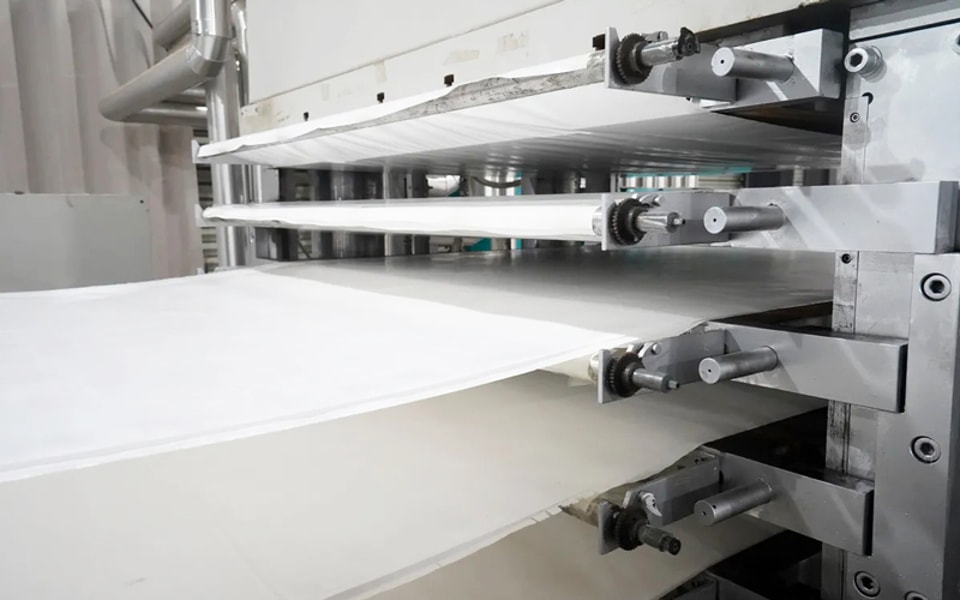
A multilayer vulcanizing press is a piece of equipment that achieves simultaneous pressurization and heating for vulcanization molding through a multi-layer hot-plate structure. It is suitable for a wide range of materials, primarily rubber, elastomeric composites, and certain functional polymer materials. Characterized by uniform temperature, stable pressure, and the capability for simultaneous multi-layer processing, it is particularly well-suited for manufacturing scenarios requiring mass production and high product consistency.
First, natural rubber and synthetic rubber are among the primary materials processed by multilayer vulcanizing presses. While natural rubber possesses excellent elasticity and wear resistance, its strength is relatively low prior to vulcanization; the vulcanization process is essential to enhance its mechanical properties. The press facilitates cross-linking reactions among rubber molecules under stable temperature and pressure conditions, thereby improving strength, elasticity, and aging resistance. Common synthetic rubbers—such as styrene-butadiene rubber (SBR), polybutadiene rubber (BR), chloroprene rubber (CR), and nitrile rubber (NBR)—are also compatible with this equipment and are widely used to manufacture products like tires, sealing rings, shock-absorbing pads, and conveyor belts.
Second, composites combining rubber with fibers, fabrics, or metals are also key processing targets. In industrial applications, many products require the integration of rubber with reinforcing materials to enhance overall performance. For instance, rubber conveyor belts are typically composed of rubber and canvas layers, while automotive shock-absorbing components may incorporate both rubber and metal structural frameworks. The multilayer vulcanizing press enables the rubber to fully permeate and bond securely with the reinforcing materials under high temperature and pressure, resulting in composite products with structural stability and excellent fatigue resistance.
The third category comprises silicone rubber and specialty elastomeric materials. Silicone rubber is prized for its resistance to extreme temperatures, aging, and chemical corrosion, making it widely applicable in fields such as medical devices, electronics, and electrical sealing. By precisely controlling the vulcanization temperature profile, the multilayer vulcanizing press ensures that silicone rubber undergoes cross-linking and curing in a stable environment; this prevents defects such as air bubbles and cracks, thereby increasing the yield rate of finished products. Additionally, specialty materials like fluoroelastomers and polyurethane elastomers can be processed using this equipment, making it suitable for high-end industrial seals and corrosion-resistant components.
Fourth, rubber sheets and industrial gaskets represent another typical category of processed materials. Rubber sheets are widely used for industrial applications requiring anti-slip properties, shock absorption, and sound insulation, all of which demand high standards for thickness uniformity and structural density. The multilayer vulcanizing press utilizes simultaneous multilayer pressing to ensure uniform density across large surface areas, thereby preventing localized defects. It also enables the batch molding of small rubber products—such as various gaskets and flange washers—significantly enhancing production efficiency.
Fifth, the equipment is suitable for processing certain rubber-plastic blends and functional polymer materials. For instance, rubber-plastic blends can achieve complementary properties during vulcanization, resulting in materials that possess both the elasticity of rubber and the strength of plastic. Additionally, functional polymer materials requiring flame retardancy, oil resistance, or antistatic properties can undergo structural shaping and performance optimization through the multilayer vulcanization process.
Finally, in the realm of emerging materials, the multilayer vulcanizing press is increasingly used to process eco-friendly elastomers and recycled rubber materials. These materials typically demand higher process stability and precise control over temperature and pressure to avoid performance fluctuations. The press's capability for simultaneous multilayer processing helps ensure material consistency and minimizes batch-to-batch variation.
Overall, the multilayer vulcanizing press accommodates a wide range of materials—including natural rubber, synthetic rubber, silicone rubber, specialty elastomers, rubber composites, and select functional polymers—demonstrating broad applicability and versatility. By providing a stable hot-press vulcanization environment that allows materials to achieve optimal properties through cross-linking reactions, it serves as an indispensable piece of equipment in modern rubber and composite material manufacturing.


