 English
What are the common causes of cutting deviations?
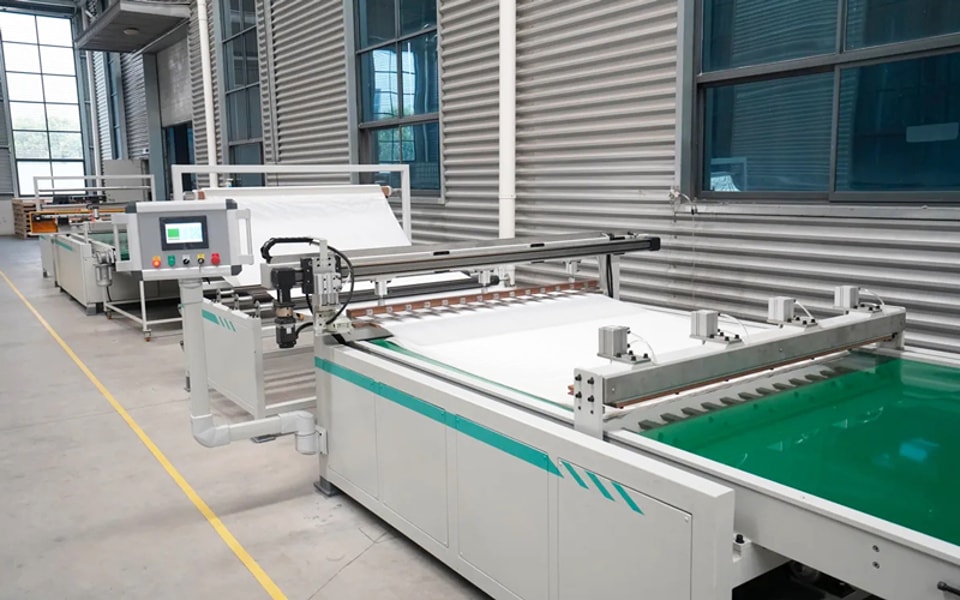
If cutting deviations occur during the long-term operation of an automatic cutting machine, they directly impact dimensional accuracy, assembly quality, and overall product consistency. Such deviations rarely stem from a single cause; rather, they result from the interplay of various factors, including equipment condition, material properties, process parameters, operating methods, and environmental conditions. Effectively minimizing these deviations requires a systematic analysis of their root causes.
First, a decline in mechanical precision is a common cause of cutting deviations. Automatic cutting machines rely on guide rails, transmission systems, and cutting mechanisms to achieve precise movement; wear on guide rails, increased backlash in lead screws, or loose transmission components can cause the cutting path to drift, thereby compromising dimensional accuracy. Furthermore, looseness or inaccurate positioning within the tool holder assembly can lead to incorrect cutting angles or uneven edges. Prolonged high-load operation without adequate maintenance is a primary reason for this loss of mechanical precision.
Second, tool wear or improper installation are significant factors contributing to deviations. Cutting tools gradually dull during high-speed operation; when the blade loses its sharpness, it fails to sever the material cleanly, instead causing tearing, dragging, or localized deformation, all of which lead to dimensional inaccuracies. Additionally, incorrect installation angles or a lack of parallelism between the tool and the cutting bed can result in inconsistent cutting depths and skewed or irregular edges. Consequently, regular tool replacement and correct installation are essential.
Third, the physical properties of the material itself influence cutting accuracy. Different materials behave differently under stress: fabrics are prone to stretching and deformation, foams exhibit elastic recovery, leather often has uneven thickness, and plastic films may slip. These characteristics can induce dimensional changes during the cutting process. If the material is not fully flattened during loading or is insecurely fastened, it may shift, resulting in cutting deviations.
Fourth, unstable material securing methods present another common issue. Insufficient suction in the vacuum system, loose clamps, or uneven pressure from hold-down devices can cause the material to shift slightly during cutting. Even minute displacements can lead to significant dimensional errors in high-precision processing—particularly when cutting long strips or complex shapes. Therefore, a stable fixture system is a crucial prerequisite for ensuring cutting accuracy.
Fifth, errors in the program path or the CNC system can also cause deviations. Automatic cutting machines rely on CNC programs to control tool movement; errors in programming, path calculations, or data input directly lead to incorrect cutting dimensions. Furthermore, issues such as signal latency, data loss, or unstable motion commands within the control system can result in trajectory drift or repeatability errors. Consequently, program verification and system stability are vital.
Sixth, inaccurate equipment calibration affects cutting results. Without regular calibration after prolonged use, the coordinate origin may shift, causing cumulative errors in overall processing dimensions. For instance, zero-point drift on the X or Y axis can introduce systematic deviations across all cutting paths. Regular coordinate calibration and accuracy checks can effectively prevent such issues.
Seventh, improper settings for cutting speed and acceleration can compromise accuracy. Excessive speed may cause inertial drift during turns or acceleration/deceleration phases, preventing the tool from strictly following the intended path—an effect particularly noticeable with complex curves or sharp turns. Excessive acceleration can also induce mechanical vibration, undermining cutting stability. Therefore, speed parameters must be appropriately adjusted based on material properties.
Eighth, environmental factors can impact cutting accuracy. Temperature fluctuations may cause thermal expansion or contraction in materials, while humidity changes can affect the dimensional stability of fibrous materials. Additionally, the ingress of dust or debris into guide rails or transmission systems can impede smooth operation, indirectly leading to errors.
Ninth, improper operation is another factor that cannot be overlooked. Issues such as misaligning material with reference lines, failing to lay material flat during loading, or incorrect parameter settings can all lead to cutting deviations. Operator inexperience or negligence can exacerbate errors inherent to the equipment or material.
Finally, insufficient overall equipment stability can result in compounded deviations. If the equipment structure lacks rigidity, vibrations are likely to occur during high-speed operation; such micro-vibrations can compromise the precision of the tool path, leading to uneven edges or dimensional inconsistencies. In summary, cutting deviations in automatic cutting machines stem from a variety of factors, including mechanical wear, tooling issues, material properties, clamping methods, programming errors, equipment calibration, operating parameters, environmental conditions, and improper operating practices. Only through comprehensive management—encompassing equipment maintenance, process optimization, standardized operation, and environmental control—can cutting deviations be effectively minimized and machining precision and product consistency enhanced.


